The gas sensitive material used by the MQ135 gas sensor is tin oxide (SnO2), which has low conductivity in clean air. When the sensor is exposed to polluting gases, its conductivity increases with the concentration of the polluted air. A simple circuit can convert this change in conductivity into an output signal corresponding to the gas concentration.
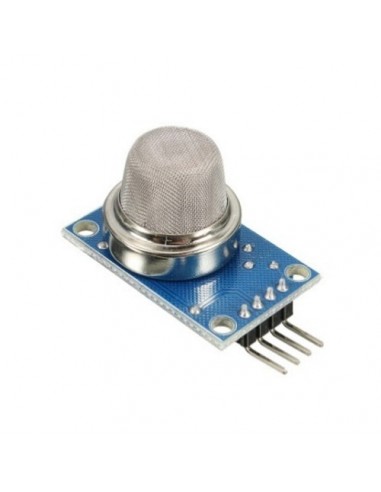
The MQ-135 gas sensor is a semiconductor device designed for air quality monitoring applications. It uses tin oxide (SnO2) as its sensitive material, whose conductivity changes when exposed to various pollutants. An onboard circuit converts this variation into both analog and digital output signals proportional to the detected gas concentration.
This module is particularly suited for indoor air quality control systems in buildings, offices, and home environments. It can simultaneously detect multiple types of pollutants including ammonia (NH3), nitrogen oxides (NOx), carbon dioxide (CO2), benzene, alcohol, and smoke. With both analog and digital outputs, it integrates easily with microcontrollers such as Arduino or Raspberry Pi to build environmental monitoring stations.
For optimal performance, allow the sensor to warm up for at least 20 seconds before taking readings. The digital output threshold can be adjusted using the onboard potentiometer.
You might also like
The gas sensitive material used by the MQ135 gas sensor is tin oxide (SnO2), which has low conductivity in clean air. When the sensor is exposed to polluting gases, its conductivity increases with the concentration of the polluted air. A simple circuit can convert this change in conductivity into an output signal corresponding to the gas concentration.